EPDM vs GRP vs Felt: Which Flat Roof Is Best?
EPDM rubber, GRP fibreglass or felt — how the three flat-roof systems compare on lifespan, cost, looks and durability, and which suits your extension or garage.
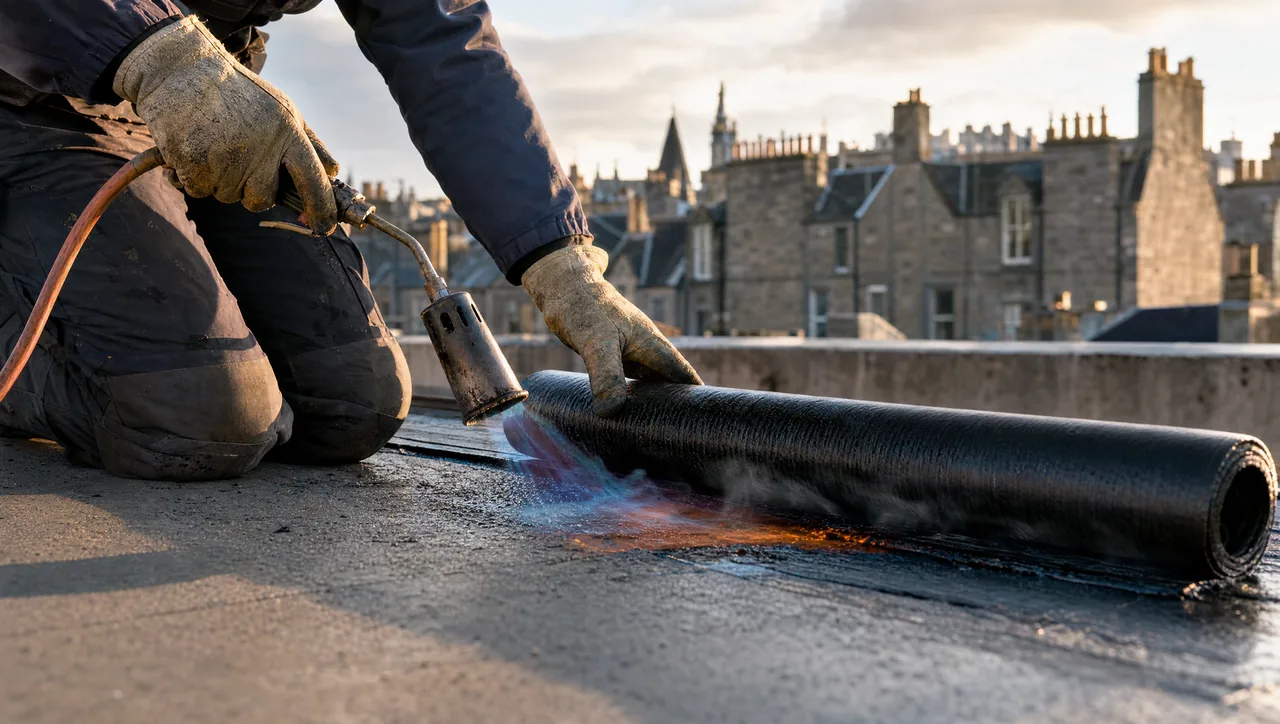
The short answer: for most extensions, dormers and garages, EPDM rubber is the best all-rounder — one seamless sheet, a 30–50 year life and a fair price. GRP fibreglass wins where the roof gets walked on or seen — balconies, walkways and terraces — and gives the smartest finish. Felt is the cheapest but has the shortest life and the most seams to fail, so it suits tight budgets and outbuildings rather than a roof you want to forget about for decades.
Flat roofs have moved on a long way from the old felt that bubbled and split after ten years. Modern systems are reliable, long-lasting and genuinely low-maintenance. The choice between the three comes down to how long you want it to last, whether anyone will walk on it, how it’ll look, and the budget. Here’s how EPDM, GRP and felt compare for Edinburgh and the Lothians, and which one wins in which situation.
At a glance
| System | Typical lifespan | Cost (fitted) | Best for |
|---|---|---|---|
| EPDM rubber | 30–50 years | £90–£150 / m² | Extensions, dormers, garages — the all-rounder |
| GRP fibreglass | 25–40 years | £100–£160 / m² | Balconies, walkways, high-traffic and visible roofs |
| Felt / built-up | 15–25 years | £70–£120 / m² | Tight budgets, sheds and outbuildings |
For a typical single-storey extension or garage roof of 15–25 m², expect roughly £1,400–£4,000 fitted, before any repairs to the timber deck underneath. These rates match our free roof cost calculator, which uses the same figures.
EPDM rubber
EPDM is a synthetic rubber membrane laid as a single continuous sheet across the roof. For most flat roofs it has become the default, and for good reason.
Strengths
- Lifespan. Installed correctly, EPDM typically lasts 30 to 50 years.
- Seamless. It goes down as one piece across the main area, so there are very few joints to fail. Fewer seams means fewer leaks.
- Flexibility. Rubber moves with the building and copes well with the expansion, contraction and freeze-thaw of a Scottish winter without cracking.
- Low maintenance. Once it’s down it largely looks after itself, with no regular treatment needed.
- Value. A strong balance of price and longevity, which is why it suits so many extensions and garages.
Things to weigh
- Appearance. A flat matt-black finish that’s tidy and practical, but plainer than fibreglass if the roof is on show.
- Foot traffic. Fine for occasional access such as clearing gutters, but it isn’t built for a roof people walk on every day.
GRP fibreglass
GRP (glass-reinforced plastic) is fibreglass laid wet over a board deck and finished with a topcoat that cures into a hard, seamless shell.
Strengths
- Hard-wearing. The toughest of the three underfoot, which makes it the usual choice for balconies, walkways and roof terraces.
- Seamless. Like EPDM, it cures into one continuous surface with no joints across the field of the roof.
- Finish. A smart, smooth surface that can be coloured, so it’s the best option when the roof is visible or you want it to look the part.
- Durability. Stands up well to weather and traffic and has a long, dependable life.
Things to weigh
- Cost. Usually the dearest of the three, reflecting the labour and materials.
- Installation conditions. It’s laid wet and needs dry, settled weather to cure properly, so timing matters in a Scottish climate.
- Rigidity. It’s hard rather than flexible, so it relies on a sound, stable deck beneath it.
Felt (built-up roofing)
Felt, or built-up roofing, is the traditional flat-roof method — overlapping layers of bitumen-based sheet bonded together. Modern torch-on felt is a real improvement on the old pour-and-roll product, but it remains the budget end of the market.
Strengths
- Cost. The cheapest of the three to supply and lay.
- Familiar. A well-understood system that most roofers can install quickly.
- Sensible on outbuildings. A reasonable choice for sheds, stores and low-value structures where long life isn’t the priority.
Things to weigh
- Lifespan. The shortest of the three, typically 15 to 25 years.
- Seams. Built up from overlapping sheets, so it has the most joints, and joints are where flat roofs usually start to leak.
- Maintenance. More prone to blistering, splitting and lifting over time than EPDM or GRP.
Which is right for your roof?
There’s no single winner — it depends on the roof and how you’ll use it.
- For a standard extension, dormer or garage you want to fit and forget, EPDM rubber is usually the right call: long-lasting, seamless and good value.
- For a balcony, walkway, roof terrace or any roof that gets walked on or is clearly visible, GRP fibreglass is worth the extra for its hard, smart finish.
- For a shed, outbuilding or a genuinely tight budget, felt does the job, as long as you accept a shorter life and more seams.
Whichever system you choose, the deck and the falls underneath matter as much as the covering — a flat roof needs proper drainage so water runs off rather than ponding. Our guide to the benefits of a modern flat roof covers that side, and you can see our work on flat roofing. For how flat roofs sit alongside slate and tile prices, see roofing costs in Edinburgh.
How to get an exact price
A range is for budgeting; a survey is for deciding. Three ways to get closer to your number:
- Free roof cost calculator — a few quick questions, an instant indicative range.
- Free AI roof report — enter your address for approximate measurements and an indicative cost.
- Free survey — we check the deck, the falls, the drainage and how the roof will be used, then put a fixed, written price in front of you. No obligation.
Prices in this guide are honest 2026 estimates for Edinburgh and the Lothians, not a quotation. The only figure that counts is the one on your survey — and that one’s free.

Frequently asked questions
Is EPDM or GRP better for a flat roof?
Both are excellent and far outlast felt. EPDM rubber is a single seamless sheet that flexes with the building and typically lasts 30–50 years, making it the best all-rounder for extensions and garages. GRP fibreglass is harder underfoot and gives a smarter, paintable finish, so it wins for balconies, walkways and roofs that get foot traffic.
How long does an EPDM rubber roof last?
A properly installed EPDM rubber roof typically lasts 30 to 50 years. Because it goes down as one continuous sheet with no joints across the main area, there is very little to fail over time. It flexes with the building's movement and copes well with the freeze-thaw cycles of a Scottish winter, which is why it has become the default choice for flat roofs.
How much does a new flat roof cost in Edinburgh?
As a 2026 guide, EPDM rubber is £90–£150 per m² fitted, GRP fibreglass £100–£160 per m², and felt £70–£120 per m². For a typical 15–25 m² extension or garage roof that usually works out at roughly £1,400–£4,000 fitted, before any repairs to the timber deck underneath. A free survey gives you an exact figure.
Why does felt cost less than EPDM or fibreglass?
Felt, or built-up roofing, uses overlapping layers of bitumen-based sheet, which is cheaper in material and quicker to lay. The trade-off is a shorter life and more seams, and seams are where flat roofs usually fail. It can be the right call on a tight budget or a shed, but EPDM and GRP generally give better value over the full lifespan.
Can you walk on a flat roof?
It depends on the system. GRP fibreglass is the most hard-wearing and is the usual choice for balconies, walkways and roof terraces that take regular foot traffic. EPDM and felt are fine for occasional access, such as cleaning gutters or maintenance, but neither is designed for daily use. Tell your roofer how the roof will be used so the right system is specified.
How can I get an accurate price for my flat roof?
Use our free roof cost calculator for an instant budgeting range, or the free AI roof report for an indication from your address. For an exact, fixed figure, book a free no-obligation survey — we check the deck, the falls, the drainage and how the roof will be used, then put a written price in front of you.